The first chapter
Vice Alliance existed for a year. Two designers, a hot magenta wordmark on black, a small studio operating out of pure conviction. Inside twelve months we had shipped work for C-SPAN, ESPN, ABC News, Good Morning America, WWE, Final Fantasy, Seagate, and roughly twenty-six other clients across nightclubs, record labels, rival agencies, and the first wave of internet startups. It was 2008 going into 2009. The brand was loud. The work was louder. Then it stopped. Both founders went solo into other practices, into other careers, into the kind of decade-long detours that you only take seriously in hindsight.
For seventeen years the studio sat dormant. The domain stayed alive. The work didn’t.
The intervening 17 years
What happened in between is the actual prerequisite for what we’re doing now.
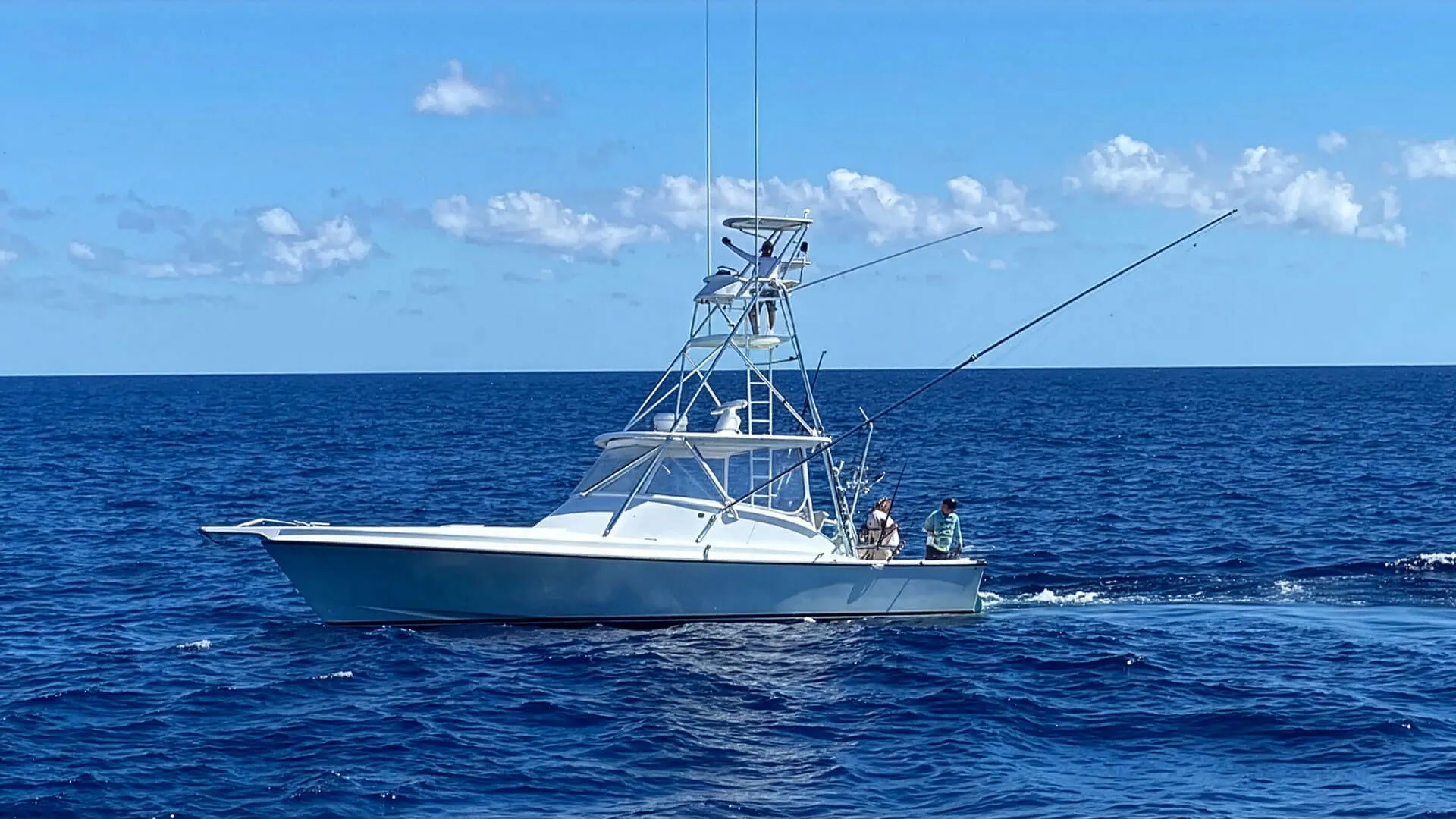
Kit went to TheGlobe.com, the 1998 IPO that opened up six hundred and six percent on its first trading day, the largest single-day pop in the history of public markets at the time. He filed two patents in 2005. From there it was Tribune Publishing’s AWS migration, moving the LA Times, the Chicago Tribune, the Sun-Sentinel, the Baltimore Sun, and the Hartford Courant out of their datacenters and into the cloud. Then Ultra Music Festival, scaling from seventy-five hundred attendees to north of twenty-four thousand. Then Robbie’s of Islamorada, the dock-and-restaurant institution he has been webmaster of record for since 2016. Ten years on, that’s $7.1M in attributable online revenue. In parallel: FishIntel.ai, a working fishing-intelligence platform, and DirtyBoat Charters in the Florida Keys, which Kit operates himself as Captain Kit Carson.
Angelo went into senior UX at Disney, Marriott, Meta (specifically the Beat Saber team), Malibu Rum, and P&G’s ZzzQuil. Two decades of enterprise-grade work, shipped under the brands you already know, for the audiences you already trust.
These were not parallel sabbaticals. They were two separate careers, each one continuously shipping, accumulating the kind of scar tissue you cannot fake and cannot rent.
What changed in 2026
For most of those seventeen years, the math of building production-grade software was the math that has always governed agencies. Three engineers, six months, a six-figure budget, and a long tail of maintenance. That math is what kept the original Vice Alliance from being a real software studio in 2008; we could ship brand and front-end, but the back-end was someone else’s problem.
That changed last year. Claude CLI and the internal tooling Kit had been building on top of it (what we call OpenClaw) matured to the point where the cost of a custom booking engine, a bespoke CRM, an operator-grade AI agent, or a full-stack SaaS product collapsed to a fraction of what it had been the quarter before. Not by half. By an order of magnitude.
The proof case was internal: the DirtyBoat custom booking engine, after ten years on FareHarbor, finally rebuilt as native infrastructure on a stack we owned. The productized case came shortly after. Islamorada Luxe Charters, a non-technical client who built and shipped her own production site inside the OpenClaw workspace and ranked page-one for “Islamorada Sandbar Charters” in fourteen days. The studio wrote zero lines of code on her repo. We provisioned the workspace; she built the company.
That is the moment we both looked up and said: the old studio is now possible again, but with a different lane underneath it.
The new engagement model
Two principals. One shared book. Eight services covering everything from brand strategy to product design to engineering. Five stages from discovery to operate. Most engagements ship inside a quarter, not a year.
The new lane underneath everything is OpenClaw. Kit’s internal Claude CLI tooling, refined across two years of client work, which collapses the cost of operator-grade infrastructure to something a small studio can actually carry on its books. We are not selling billable hours; we are selling the workspace and the bot. The retainer is the relationship; the workspace is the leverage.
We are deliberately keeping the studio small. Two principals, deep involvement on every engagement, no junior layer doing the work in the back room. The economics of OpenClaw are what make that posture sustainable. Without it, this would be the same agency we ran in 2008, with the same constraints and the same ceiling.
Why now, why us
Seventeen years of separate scar tissue is the credential we couldn’t have offered in 2008. The patents, the AWS migration that carried five of the largest regional newspapers in America, the $7.1M in retained client revenue at Robbie’s, the Fortune 500 UX at Disney and Meta and Marriott. Those are not line items on a deck. They are the reason we can sit across from a founder or a CMO in 2026 and tell them, with a straight face, that we have already shipped this.
The studio is the same two principals it always was. The brand has changed; the lane has changed; the toolkit is what made coming back actually possible. The work, when we do it, will speak the same way it did in 2008. And it will ship faster, deeper, and at a price that didn’t exist a year ago.
Engagements by introduction or inquiry. The contact form is honest.