The prediction that came true
Gartner said in February 2024 that traditional search would drop 25% by 2026. AI chatbots would handle queries directly, no website click.
We’re in 2026 now. They were right. Google went from 93% market share in 2022 to 90% today. ChatGPT doubled from 400M to 800M weekly users between early 2025 and now, handling 2 billion queries a day. Perplexity, Claude, Google’s own AI Overview. All of them fielding questions that would’ve sent you to ten blue links two years ago.
Here’s what changed: AI synthesizes an answer and shows it to you. Usually, it doesn’t send you anywhere. ZipTie’s data says 93% of AI search sessions end without a click. The traffic you used to get from informational queries. The early-stage visits that built brand awareness and fed your retargeting pixels. Now that goes nowhere.
What this breaks
The SEO playbook from 2012-2022 assumed one thing: users query Google, Google shows a list, your job is to rank high. That still works for navigational and transactional searches. It’s broken for informational and research-stage queries. Those are the ones that build authority and attract buyers who are still shopping.
If you publish to establish credibility and pull inbound traffic, the game changed. Your audience now gets answers from an AI that may or may not cite you. The traffic won’t come back. The only question is whether the AI chooses your site as a source.
The difference between SEO and AEO
AEO (Answer Engine Optimization) means structuring content so AI systems pick it as a source for synthesized answers. It’s different from SEO in specific ways.
SEO ranks you on a search results page. AEO gets you cited in an AI answer. Some signals overlap: good content, authority backlinks, clean tech. Some diverge.
For AI citation, what matters is schema.org markup, a proper llms.txt file that tells language models how your site is organized, clear entity relationships in your text, and a track record of specific, verifiable claims instead of generic overviews. AI picks sources that answer precisely. Vague content gets folded into the synthesis. Specific, quotable content gets cited.
What FishIntel taught us about this in practice
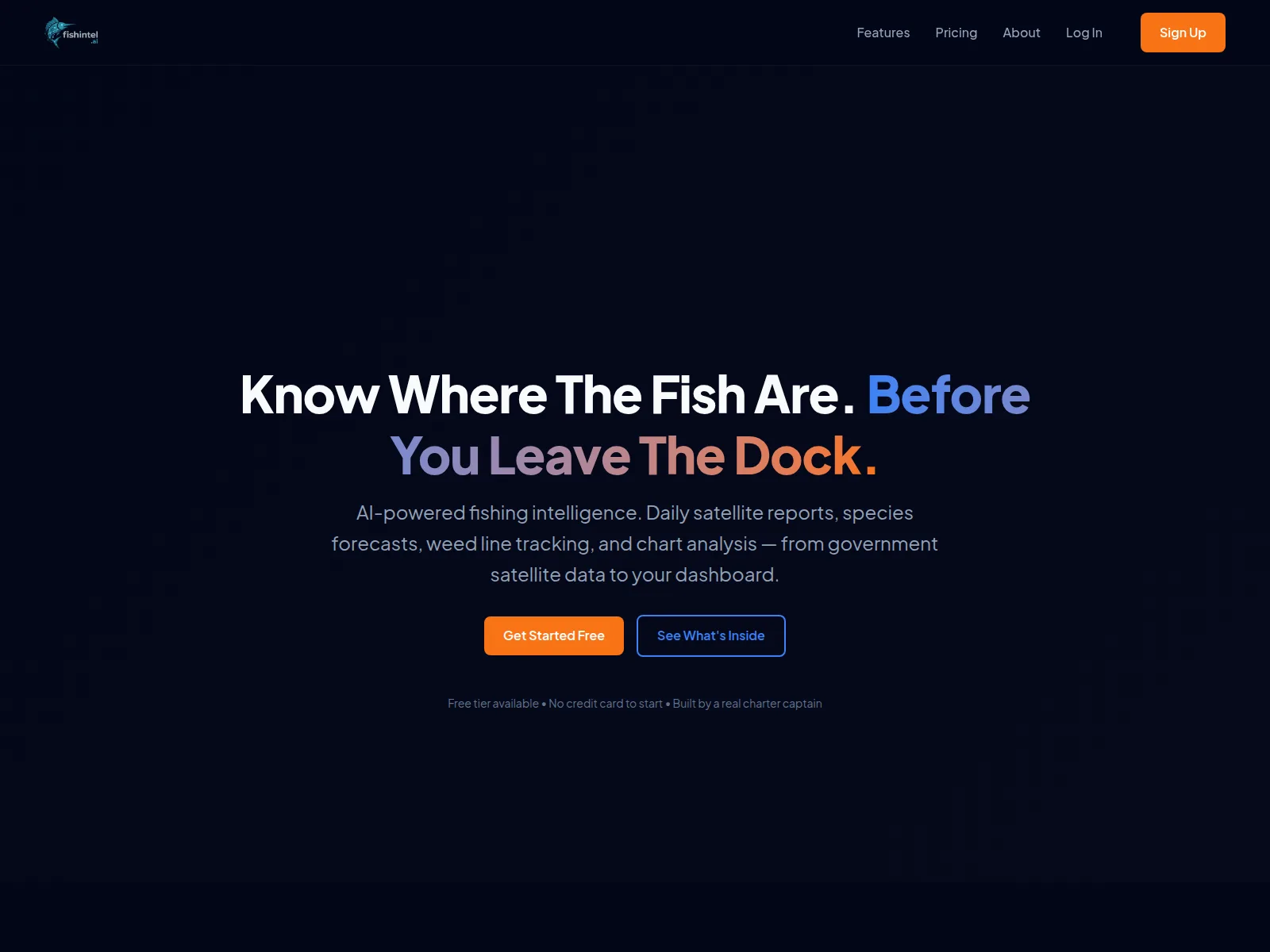
FishIntel.ai is a platform we built on Astro, Supabase, Gemini, Claude Vision. Narrow-domain: fishing intelligence for recreational anglers. The challenge was getting visibility in a category owned by government agencies, university research, and fishing forums with two decades of indexed content.
What worked was specificity. Pages for each fish species, with structured data. Location reports with coordinates and verified NOAA data. Content that answers with numbers, not prose. Three months after launch, FishIntel pages showed up in Claude, ChatGPT, and Perplexity answers to Florida fishing questions. Not because we had bigger budgets. Because the content was specific enough to quote.
Same principle applies everywhere. AI doesn’t reward content volume. It rewards content that answers one specific question better than anything else.
The practical steps
Start with the technical baseline. Every page needs schema.org markup for its content type. Add an llms.txt file that shows AI crawlers how your site is organized. Use canonical URLs, clean pagination, no indexing conflicts. Table stakes. They don’t guarantee citation, but without them you won’t get it.
Then audit your content for specificity. Look at your highest-traffic informational pages. Does each one answer one concrete question with a verifiable claim? If it’s mostly “here’s an overview,” rewrite it. Put something an LLM can quote: a specific statistic, a conclusion, a recommendation with reasoning.
Finally, measure AI visibility. Standard analytics won’t show direct AI traffic. Look for branded query growth, direct traffic bumps, referral patterns from Perplexity and ChatGPT. The numbers are small now, but they’re research-stage traffic. Users who aren’t ready to buy yet.
Companies building for AI citation now will compound their advantage as this shift continues. Companies waiting for the dust to settle are losing ground to competitors moving today.
Sources: Gartner search volume forecast 2024 · Search Engine Land on traffic decline · Bounteous on AEO · ZipTie on AI search click behavior