

Enterprise UX at the scale of a Fortune 200.
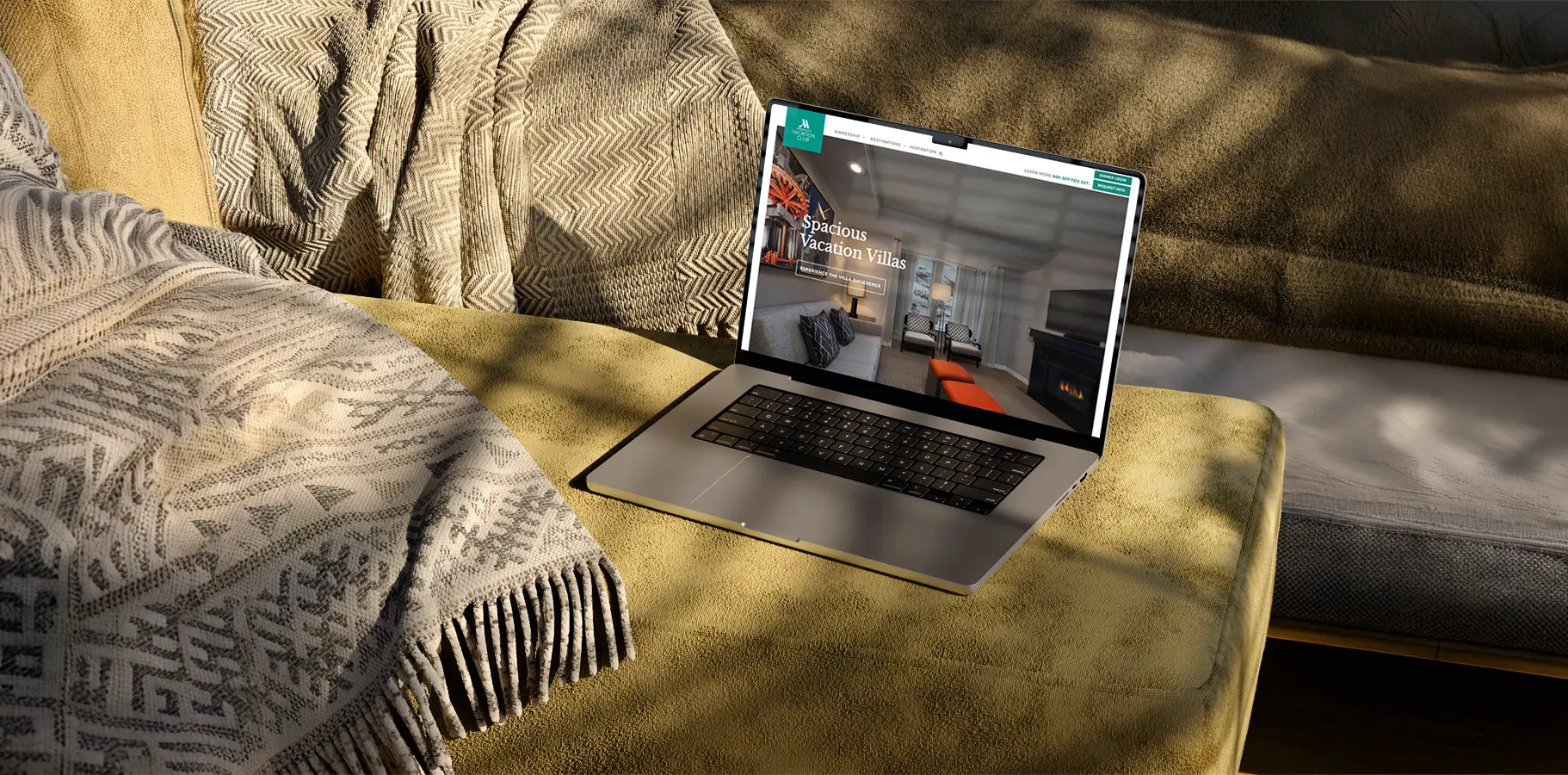
Multi-year redesign for Marriott Vacation Club across four brands. Mobile app, booking system, member portal. Stripped the complexity way down while keeping everything that actually matters.
The product worked.
The experience didn't.
on mobile devices
mobile vs. desktop
mapped across journeys
categories, by department
Members filed refund requests not because they disliked the product, but because they couldn't figure out how to use their benefits. The platform was engineered around internal business units, not member needs. A system for people who already understood it served nobody.


Twelve categories.
None of them "Book a stay."
Top-level nav had twelve categories organized by internal departments. Members seeking to book a stay hit a system that assumed they already understood the product. Starting principle: organize around what members do, not how the business is structured.
The brief wasn't a visual refresh.
The brief was to close a 40% gap.
Two user types: first-year owners booking simple stays, decade-long members managing complex portfolios—borrowing, banking, waitlisting, expiration. One system tried to serve both. Failed both.
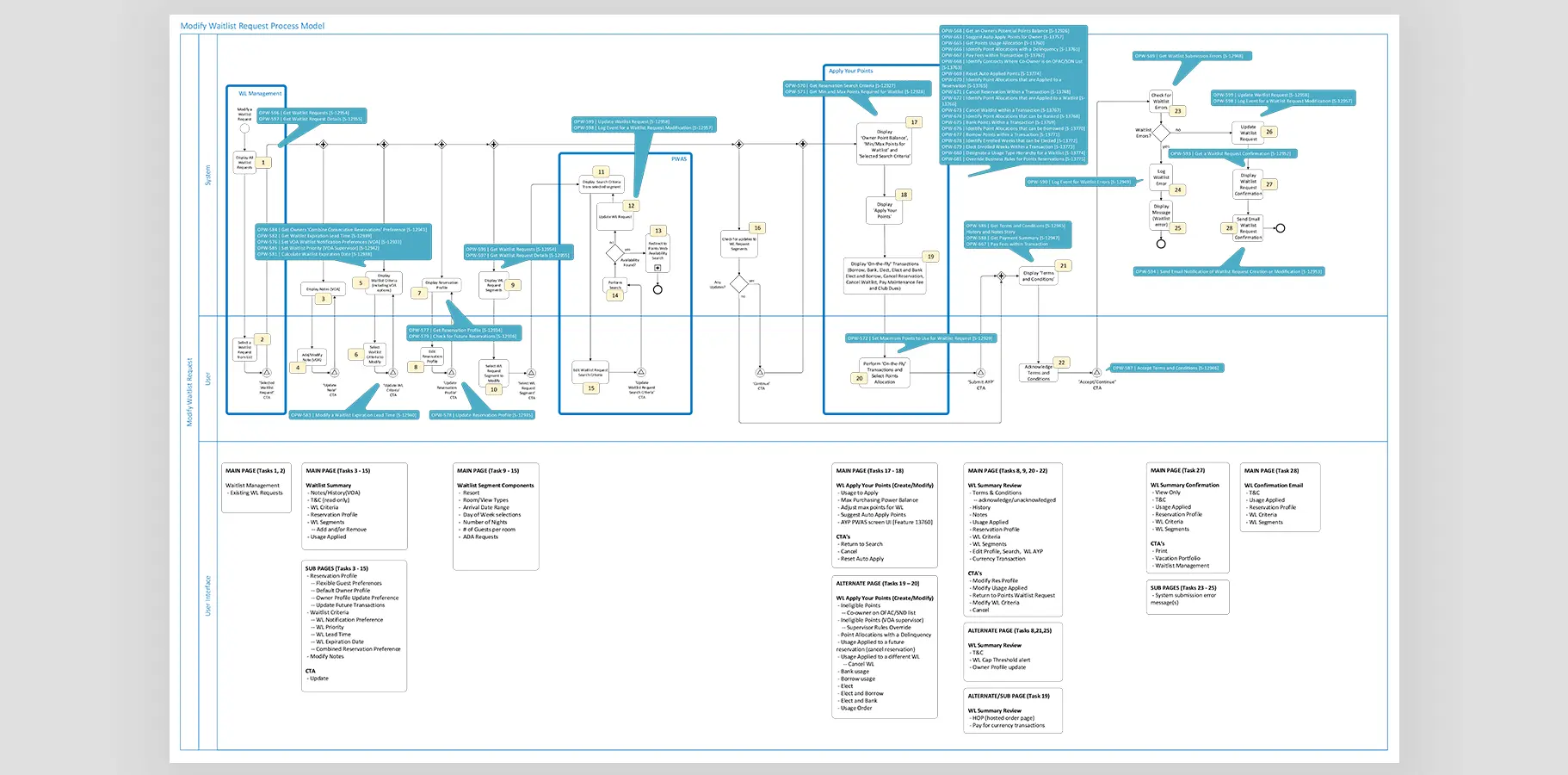
Before wireframes, 47 friction points mapped across member journeys. Research separated product viability (good) from UX quality (broken). Product wasn't the problem. The interface was.
Also built a unified design system for four distinct brands: Marriott Vacation Club, Hyatt Residence Club, Sheraton Vacation Club, ILG exchange network. Shared architecture, distinct identities.
Four brands.
One unified architecture.
Each brand: own identity, member base, benefit structures. System had to serve all four with shared logic, distinct visual presence.
Mobile-first.
Member-centered. Progressive.
Information architecture rebuilt from member actions, not business units. A mobile-first system that addressed the 40% conversion gap directly. Progressive complexity for a product serving both first-year members and decade-long portfolio managers on the same platform.
Task-based navigation
not department-based.
Rebuilt 12 department-organized categories into task-based navigation reflecting actual member behavior. Book. Manage. Exchange. The structure follows how members think about their membership, not how the company is organized.
Closing the gap.
All four brands.
Designed across four brands for iOS and Android. Every core member journey — booking, points management, exchange, account — rebuilt for mobile-first. The 60% of sessions happening on mobile now land on a platform built for them.
Simple to start.
Powerful at depth.
Interfaces that scale from simple stay booking for new members to advanced portfolio management for long-term owners. Points borrowing, banking, waitlisting, expiration tracking — available without overwhelming new members who don't need them yet.
Shared components.
Distinct identities.
A component library serving four brands with shared interaction patterns and platform logic while each brand's visual identity remains intact. Built to extend to additional brands in the Marriott portfolio without re-architecting from scratch.
A system built
for the business.
Not the member.
Enterprise UX
is never just a redesign.
The Marriott engagement confirmed a principle we apply to every enterprise program: the research phase isn't preliminary to the work. It is the work. Forty-seven documented friction points before wireframing means no design energy spent solving problems that don't exist.
proved that identity and architecture
can be separated.
Vacation ownership is among the most complex consumer financial products to navigate digitally — points that expire, benefits requiring activation, exchange windows, waitlist logic. This engagement proved that complexity at this scale requires a research-first approach, not a design-first one.
What you build can be shared across brands. What you express stays distinct. The unified system across four brands validated that multi-brand digital estates are achievable without brand dilution — a model we carry into every multi-stakeholder engagement since.