

Content as infrastructure. Not as a campaign.
Content strategy and information architecture for Disney's Public Affairs platform. This is the institutional voice of the world's largest entertainment company, built for regulators and policymakers, not consumers.
The voice of
a $200B institution.
Public Affairs speaks to regulators, policymakers, community leaders—not consumers. Has to be opposite of everything else Disney builds: no entertainment vocabulary, no campaigns, no fan energy.
The brief wasn't a redesign.
The brief was governance.
Content architecture and editorial system producing consistent, archivable, official communication. Topics shift quarterly—regulatory updates, community investment, environmental, labor. Audiences expect institutional authority.
The work covered taxonomy, editorial workflow, governance rules, and the structural design of the surface that publishes and maintains content. The tone was a deliverable as much as the architecture.
A successful outcome looks like nothing changed for the stakeholder reading a specific policy topic — and everything became more reliable for the editor publishing the fifth story about the same regulatory topic three years later.
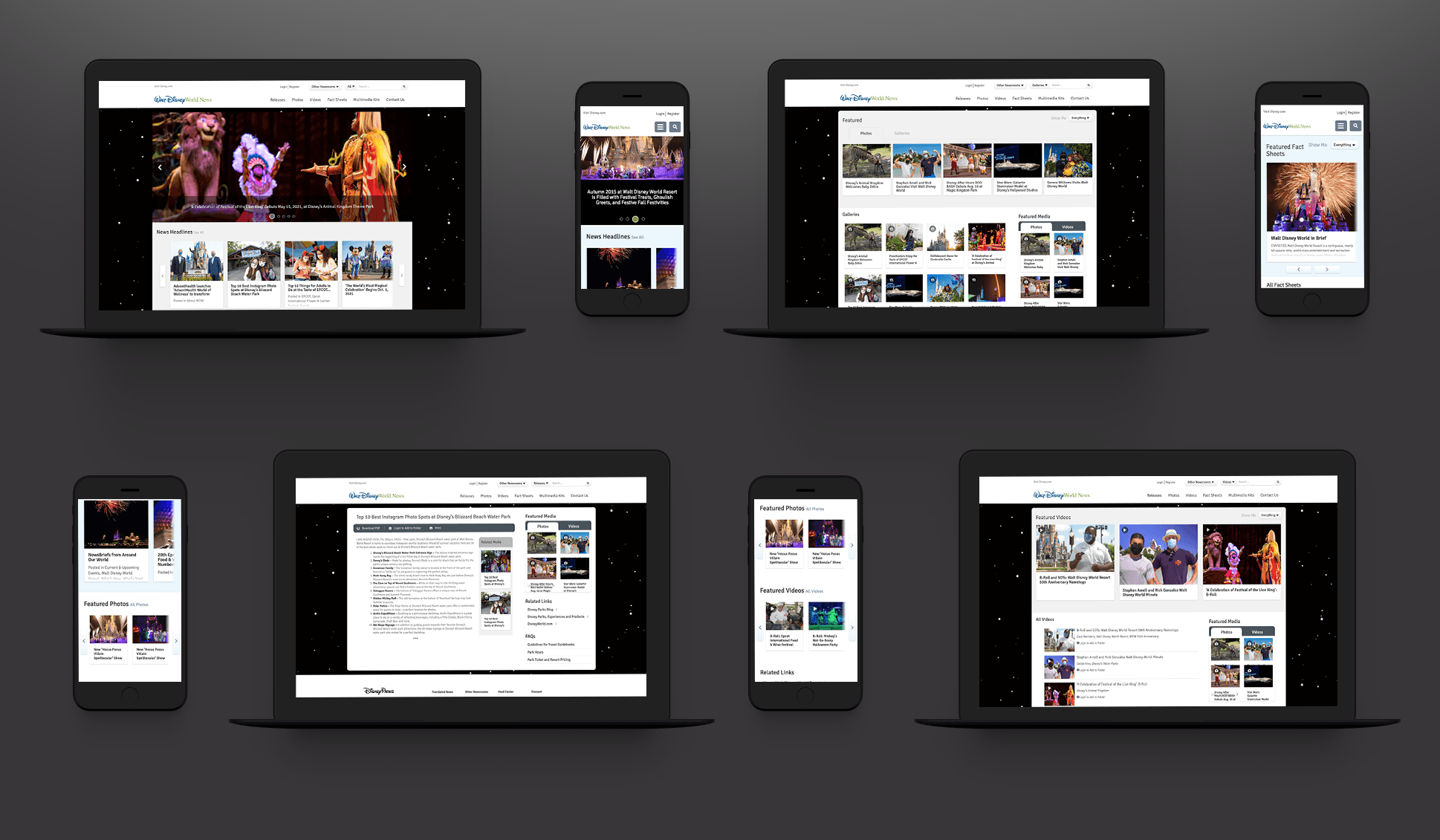
Four audiences.
One authoritative voice.
The content system had to serve four distinct stakeholder types simultaneously, each with different informational needs and different expectations of authority — all reading from the same platform.
Regulators & Policymakers
Federal and state officials evaluating Disney's regulatory compliance, legislative positions, and government relations. Require factual, sourced, legally precise communication with zero promotional framing.
Community Leaders
Local officials, community organizations, and civic stakeholders in regions where Disney operates. Evaluate economic impact, community investment, and corporate citizenship against real community needs.
Media & Press
Journalists covering corporate affairs, entertainment business, and public policy. Need findable, archivable records that can be cited accurately — and a platform that never makes a journalist do unnecessary work.
Institutional Partners
NGOs, academic institutions, environmental organizations, and industry groups evaluating Disney's positions and partnerships. Require substantive depth, not surface-level commitment statements.
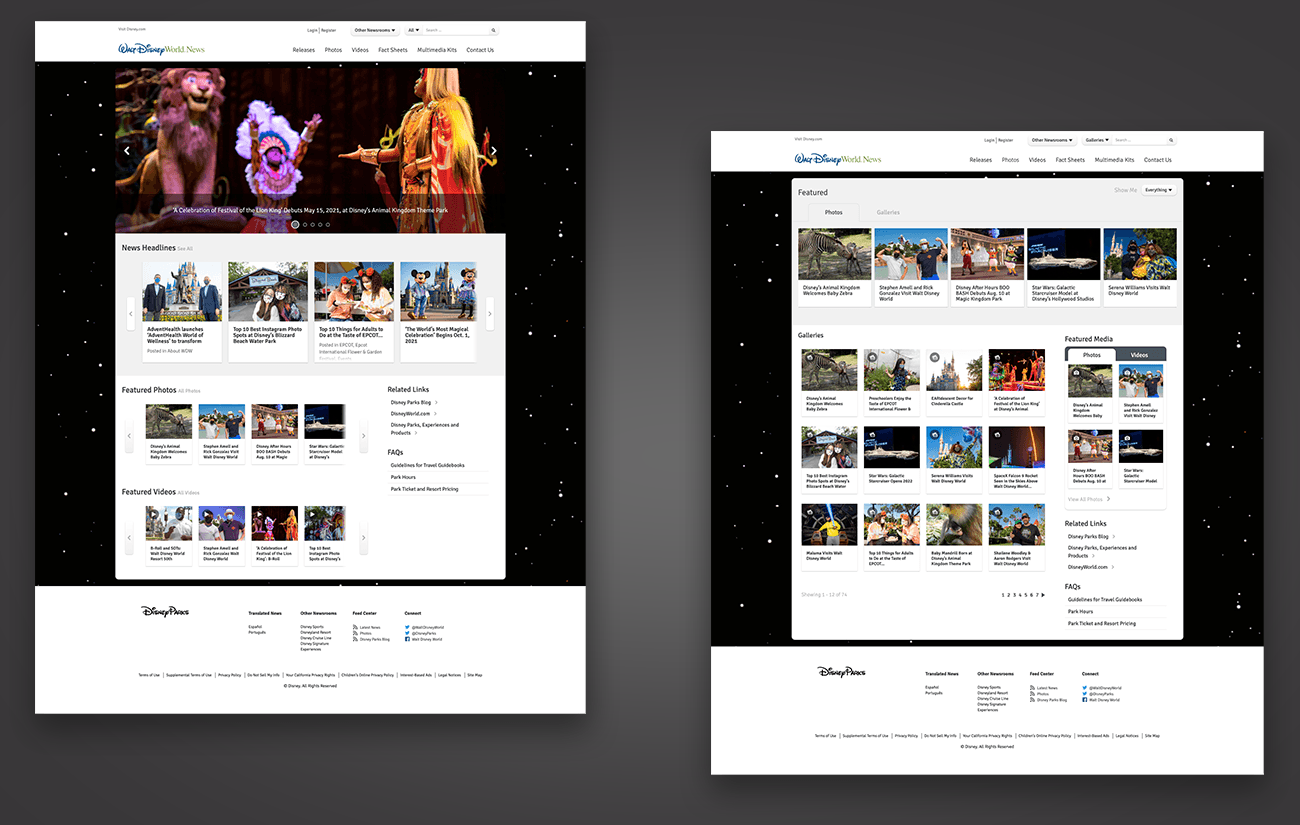
Taxonomy that
outlasts the news cycle.
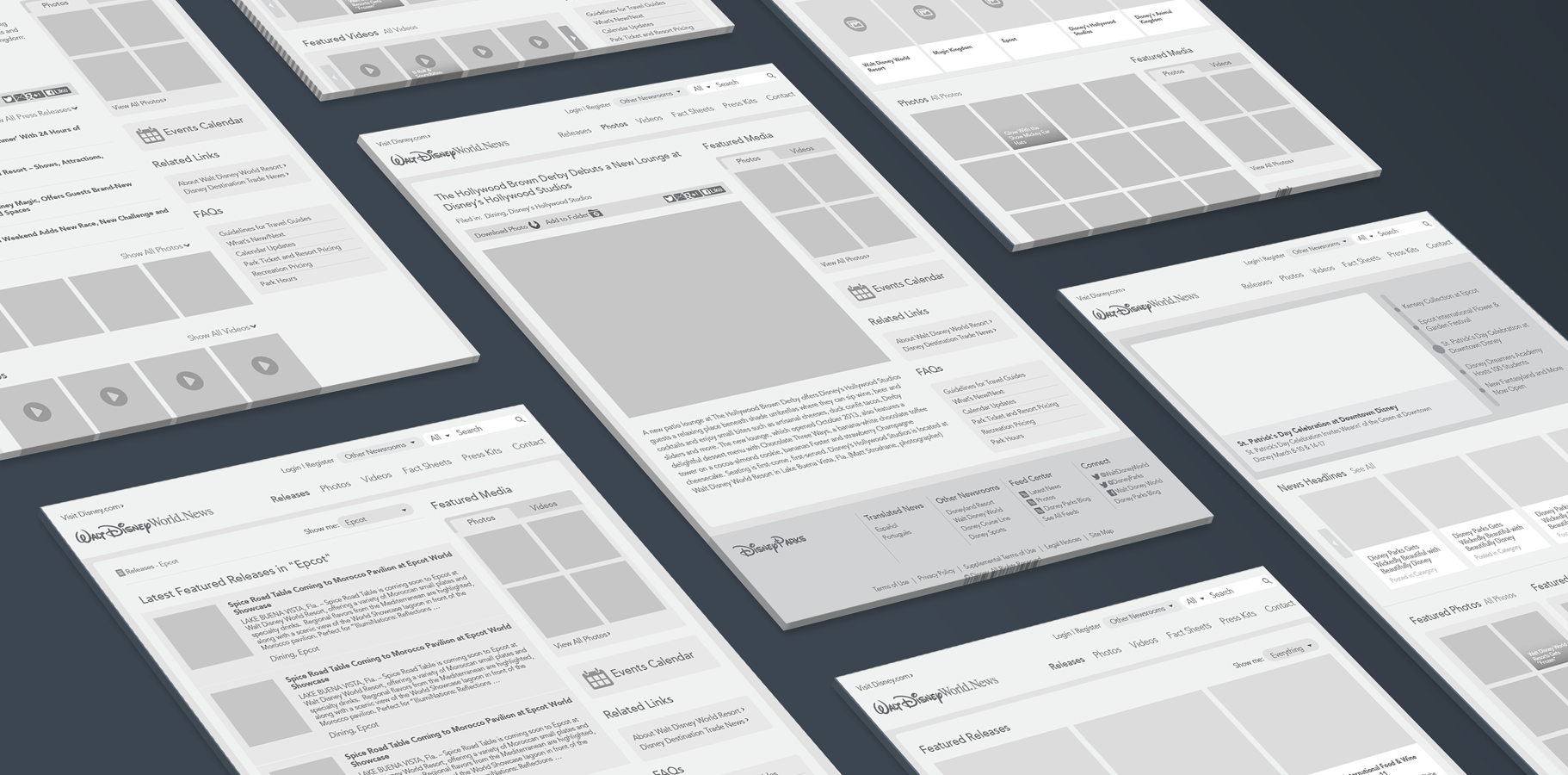
Information architecture, content taxonomy, editorial workflow, and governance framework for the platform behind Disney's official institutional communications. Built to remain authoritative three years after its initial deployment.
Categories built
for archival continuity.
A taxonomy designed to hold the current regulatory story and the one that doesn't exist yet. Content categories organized around stakeholder needs, not internal organizational structure or current news topics.
Voice governance
as infrastructure.
Editorial workflow and guidelines producing consistent institutional tone across topics, contributors, and time. The governance system determines what voice is acceptable before the editor writes a word, not after.
Restrained by design.
Authoritative by default.
A content strategy framework for institutional communication — what to publish, at what depth, with what verification requirements. Designed for a context where a single wrong word has legal and regulatory consequences.
Findable.
Archivable. Citable.
The structural design of the content platform — navigation, search, archival depth, and citation standards. A journalist doing research three years later should find the right document in under two minutes.
Public Affairs reads
like the institution..
Not like the brand.
Voice governance
is infrastructure.
The Disney engagement established a model we carry into every content system engagement: voice is not a styling layer applied at publish time. It is a governance decision made at the architecture level. Build the tone into the system, not the copy.
Campaign content is temporary.
Build each accordingly.
The content architecture built for Disney's Public Affairs had to work equally well for a story published today and one published in 2019 — findable, citable, and authoritative regardless of when it was produced. That longevity requirement fundamentally changes the information architecture.
The model transfers to any long-running content surface: enterprise documentation, B2B platforms, institutional publishing, member portals. The audience expects records that don't rot. Design for that expectation from the first content model decision.