
Five channels in. One captain. Zero missed bookings.
A multi-channel CRM and custom booking engine that replaced FareHarbor, integrated with an AI agent wired to live availability, NOAA marine forecasts, and Florida Wildlife regulations. Built first for the studio's own boat.
Inquiries arriving
from five places at once.
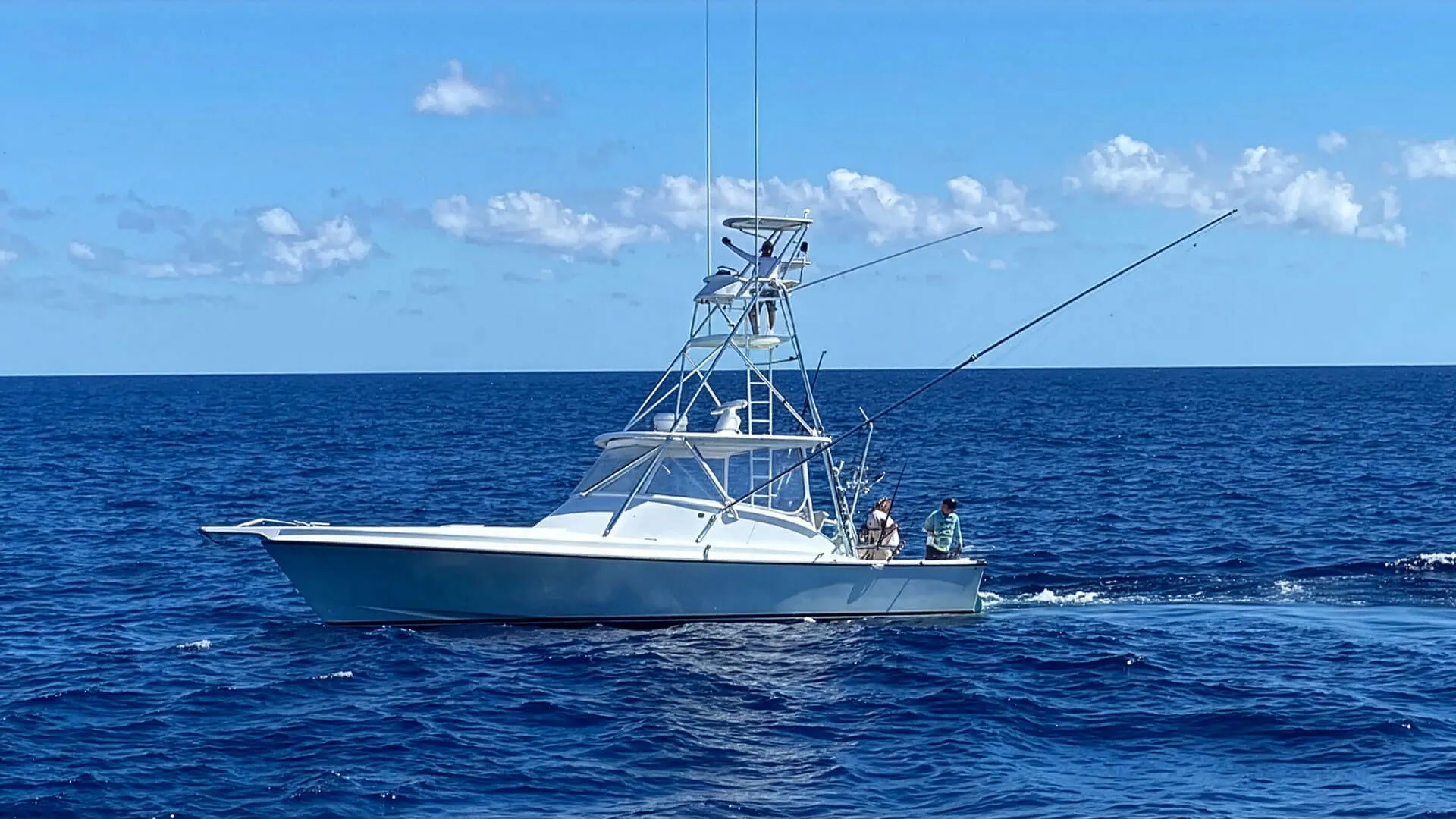
DirtyBoat 2.0: 42' tournament-rigged Liberty Express running light-tackle charters out of Robbie's. Hard problem wasn't the website. It was five channels customers already used to reach Kit.
The brief came from the helm.
The brief was: one inbox, no missed booking.
Customers reaching through SMS, Facebook, Instagram, website form, FareHarbor booking widget simultaneously. No operator view of which conversation was about what.
Not a website problem. Systems-integration problem. Deliverable: multi-channel CRM unifying every inbound message, plus booking and ops underneath.
The booking flow ran on FareHarbor for a decade, a stable, working rental that did the job, but never the job we actually wanted done. Building a custom engine to replace it was always too expensive to justify against a working widget. That math changed when OpenClaw, the studio's internal Claude CLI tooling, collapsed the build cost of a production-grade booking engine. We shipped our own, native to the brand and tuned for how charter operations actually work, and retired the widget.
Plus 10DLC: the Campaign Registry approval required to send A2P SMS at scale through US carriers. Most operators give up at the brand-verification step. The DirtyBoat campaign cleared it.
Five channels in.
One system underneath.
Systems integration,
not just a website.
A multi-channel CRM with carrier-approved SMS, a booking engine, and an AI agent that handles inquiries while the captain is on the water.
Twilio · Messenger · IG · Web,
one operator queue.
Inbound messages from Twilio SMS, Facebook Messenger, Instagram DMs, the website contact form, and the FareHarbor booking widget all land in a single operator inbox, channel-attributed, threaded by customer, and persistent across sessions.
Carrier-approved A2P,
cleared at the registry.
The 10DLC compliance work, Brand registration with The Campaign Registry, use-case approval, sample-message review, opt-in flow documentation, and ongoing trust score monitoring. The pre-flight most operators don't survive.
Outgrew FareHarbor.
Built our own.
A native booking engine built from scratch, capacity-aware, deposit-handling, conversion-tuned for charter operations specifically. The booking widget is the brand now, not a third-party iframe stapled to the site.
Live availability.
FWC regs. NOAA weather.
A Claude-powered booking agent wired to real-time availability, the Florida Fish and Wildlife Conservation Commission's current regulations, and NOAA marine forecasts. The agent books, cites regs by chapter, and reads weather windows, across every CRM channel. Not a chatbot. An operations agent.
That's not a site build.
That's systems integration.
Multi-channel CRM,
productized.
DirtyBoat is the reference implementation. The same CRM stack, Twilio + Meta channels + 10DLC + AI agent + booking engine, is offered as a productized retainer for charter operators, marinas, and any operator drowning in messages.
Most operators have a beautiful website, four other channels that go unanswered, and a third-party booking widget that doesn't match the brand. The bookings get lost between platforms, not at the conversion step.
The DirtyBoat engagement proves a small operator can have a carrier-approved multi-channel CRM, a custom booking engine, and an AI agent that cites current Florida Wildlife regulations and NOAA marine forecasts in real time, without an enterprise IT department, and without giving up on 10DLC at the brand-verification step.
Most of the inquiries operators answer manually are already answered by data the studio has wired into the agent. The CRM captures everything; the agent handles the predictable 60% before the captain even sees the message.