
From the table to the screen, without losing the warmth.
UX strategy, information architecture, and platform design for Carrabba's Tableside. A culinary content platform that attracts food enthusiasts with genuine value while building brand affinity across 240+ restaurant locations.
Two goals.
Incompatible objectives.
Two objectives with directly opposing UX requirements. The platform had to satisfy both, or fail both.
Audience Building
Attract engaged food enthusiasts who have no prior relationship with the brand. These users are attuned to promotional intent — they abandon content the moment it feels like marketing.
Genuine editorial utility. A platform that functions as a real culinary resource, not a brand vehicle. Trust first, brand second.
Brand Conversion
Convert engaged food content readers into Carrabba's restaurant customers. The platform has to build Carrabba's brand value — or it has no business case.
Clear brand presence. Reservation CTAs, menu content, restaurant locations. The business needs to be visible somewhere.
"A platform that feels like a marketing funnel loses food enthusiasts before they read a single article." Solution: earn trust through utility first. Brand appears after the reader's already invested. Every design decision—IA, content, type, photography—answered one question: where's the brand/utility line?
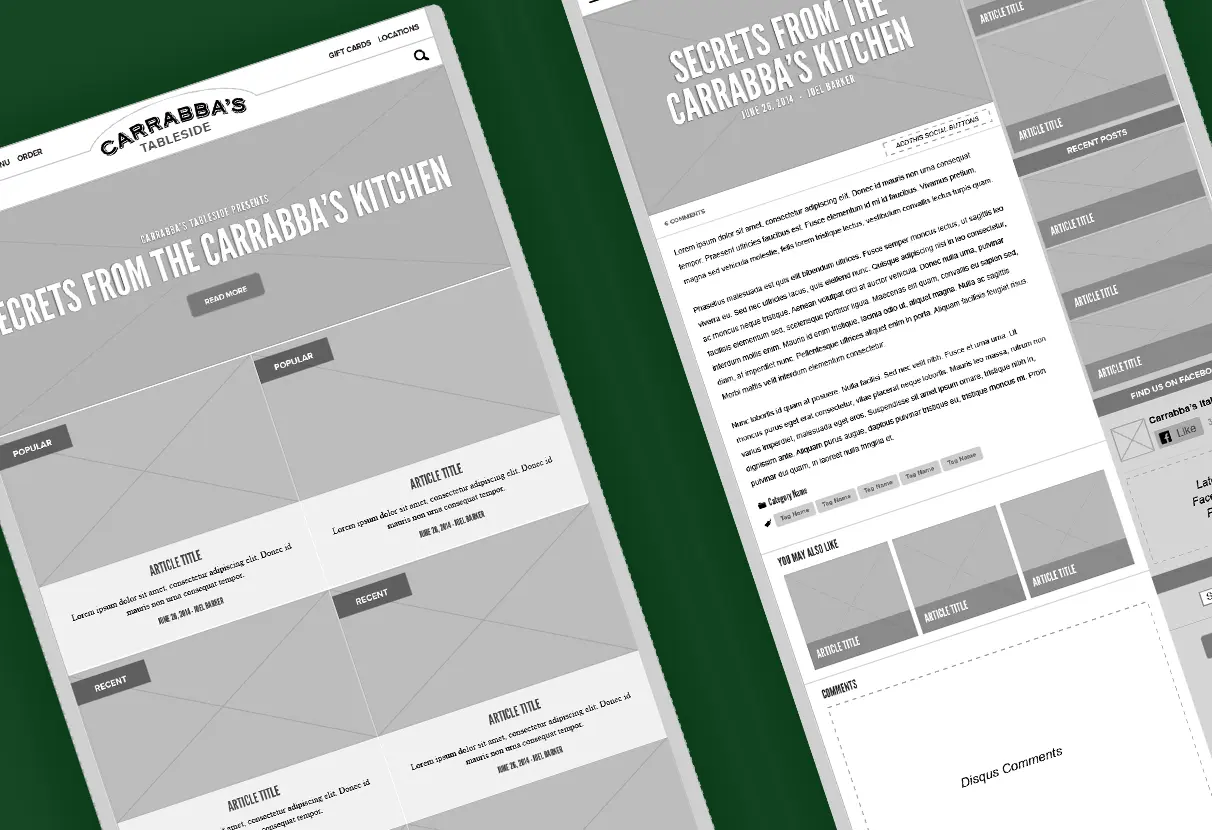
Secrets from
Carrabba's Kitchen.
The content strategy anchored around a genuine editorial proposition — authentic Italian cooking techniques from Carrabba's professional kitchens, published as a real resource for home cooks. Not recipes for recipes' sake. Kitchen knowledge that's hard to find and genuinely worth reading.
The challenge wasn't writing the content.
It was earning the audience before the brand appeared.
Food enthusiasts are particularly attuned to promotional intent. The editorial design had to communicate genuine authority and utility — real techniques, real chefs, real kitchen knowledge — before any Carrabba's branding became visible in the experience.
The additional design constraint: the platform had to remain editorially viable as content published over time. Without editorial guidelines to maintain UX integrity, quality degrades as real content launches. The system had to constrain the content as much as present it.
The WordPress build was designed for internal team management without developer dependencies — every content decision the editorial team would encounter had been resolved at the design system level.
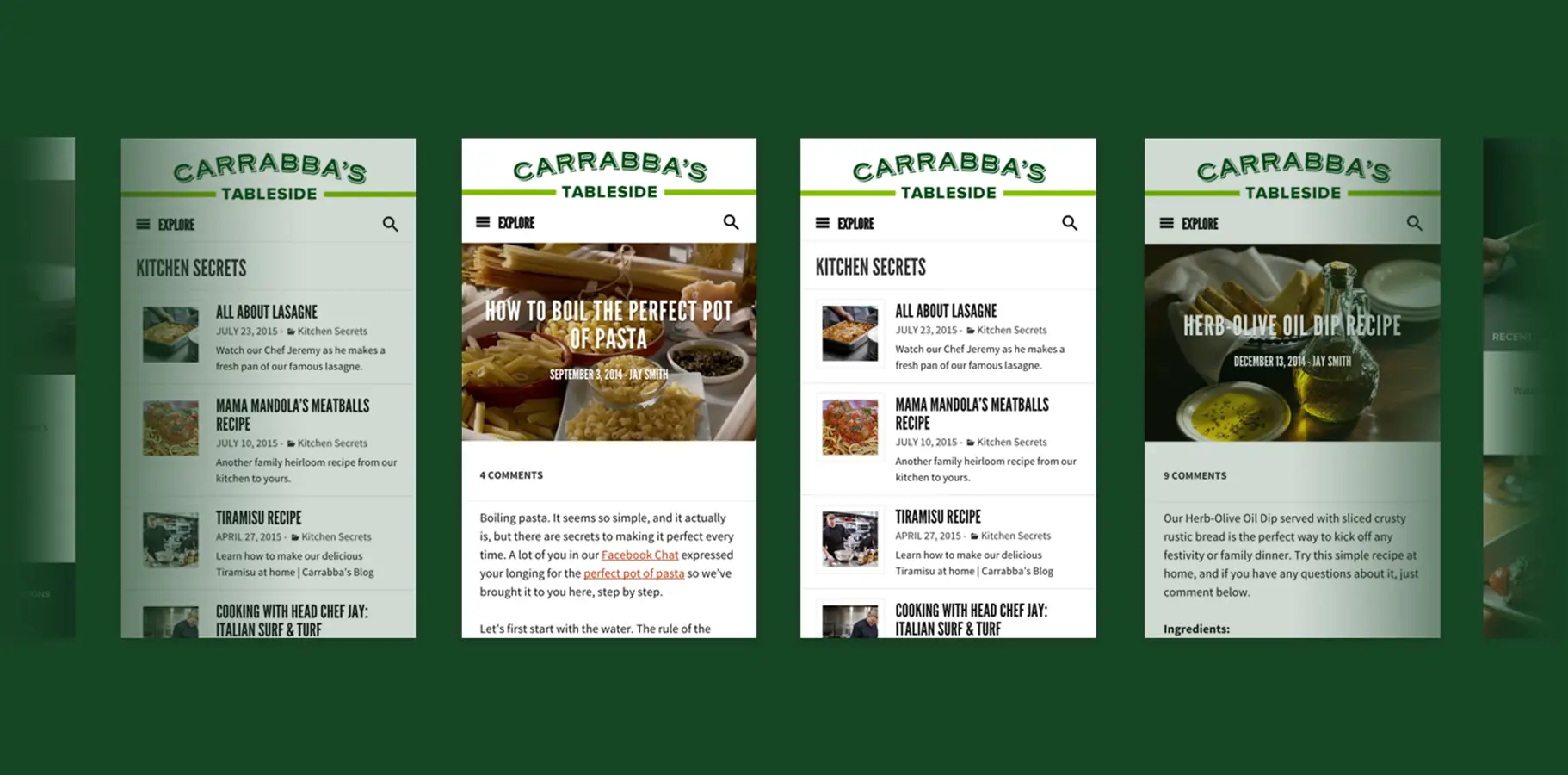
Trust first.
Brand earns its place.
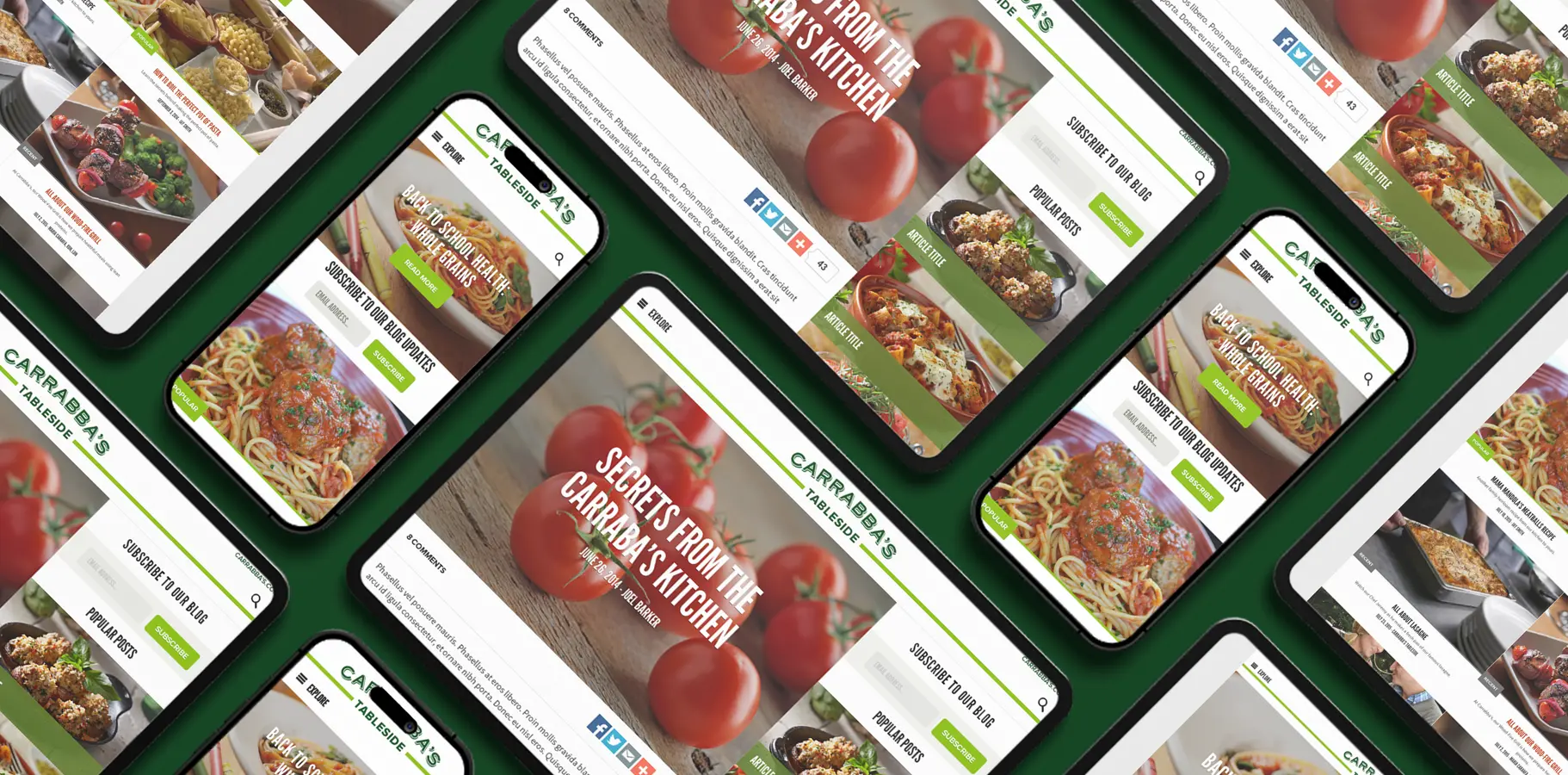
Information architecture, mobile UX, visual design system, editorial guidelines, and WordPress build — the full platform from strategy through launch, built to be operated by the editorial team without ongoing developer support.
40% faster path
to content discovery.
Restructured content discovery around editorial categories and cooking techniques rather than restaurant menu categories. Food enthusiasts browse by technique and ingredient — not by which Carrabba's dish they want to recreate. The IA follows the audience, not the menu.
28% mobile
engagement increase.
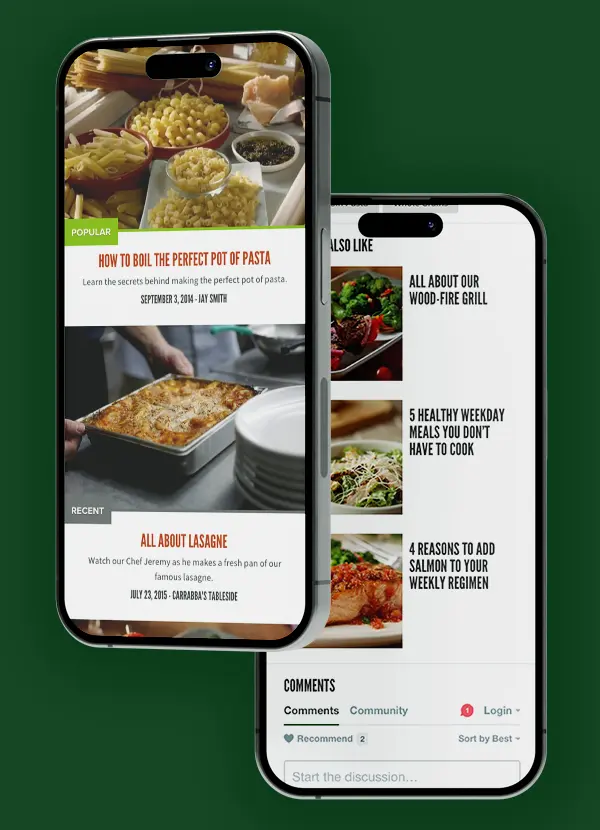
The primary reading environment for food content is mobile — recipe browsing, in-kitchen use, social sharing. Every content template was designed mobile-first with typography, imagery proportions, and CTAs calibrated for a phone in a kitchen or on a couch.
Constraints that keep
quality as the default.
A visual design system with editorial guidelines built to constrain content decisions as content launches over time. Typography, photography direction, brand integration rules — resolved at the system level so the editorial team can't inadvertently break the UX.
Operated without
developer support.
Full WordPress build with modular content components enabling non-developer content publishing. The platform was handed off with every editorial decision an internal team might face already resolved at the design level.
content discovery
increase
A platform that feels
like a marketing funnel.
Loses food enthusiasts first.
Content that earns
its brand presence.
Carrabba's Tableside confirmed a model we apply to every content strategy engagement: the audience grants brand access only after trust is established through genuine utility. The sequence matters. Trust first. Brand second.
at the restaurant door.
It follows the guest online.
The dual-audience tension — food enthusiasts vs. brand conversion — is a problem that appears in different forms across almost every content-forward engagement we run. The Carrabba's model proved that the tension is solvable, but only if the design sequence is correct: earn the reader first.
The editorial guidelines built into the platform also proved their value over time — the design system constrained content decisions that would have degraded the experience as the editorial team turned over and new contributors joined.